
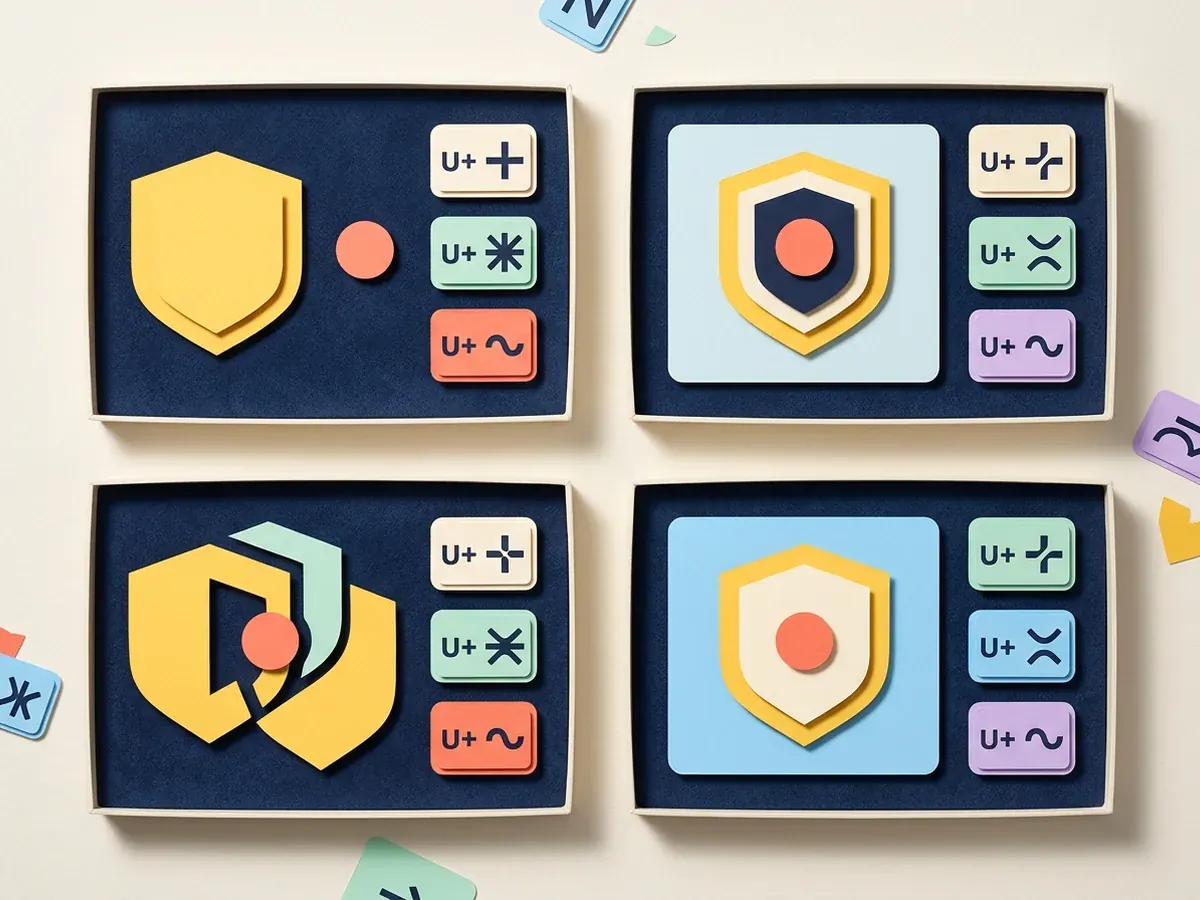
The short version
- 1Zero-width characters have distinct jobs.
- 2Inspect before deleting format controls.
- 3Identifier policy and natural-language text need different handling.
Characters without width still have work to do
Characters can influence line breaking, shaping, joining, bidirectional layout, or emoji composition without occupying visible width. U+200D ZERO WIDTH JOINER participates in many emoji sequences and in script shaping behavior.
U+200C ZERO WIDTH NON-JOINER, U+2060 WORD JOINER, and U+200B ZERO WIDTH SPACE have different semantics. Replacing all of them with one generic invisible character corrupts text.
Inspect unexpected behavior
Hidden format controls can explain cursor jumps, surprising length counts, failed comparisons, or strings that look equal. Inspect code points before deleting anything, then decide whether the character is intentional in that writing system or protocol.
A legitimate invisible character should not be confused with hidden text added to manipulate search results. This site exposes code points to users and never injects invisible keyword content.
Handle with context
Security filters should operate on well-defined identifier profiles, not a blanket list copied from an article. Text editors should preserve shaping controls that users need for correct language display.
For ordinary prose, paste from a trusted source and use the inspector when behavior changes. For identifiers, follow the protocol's normalization and allowed-character specification.
Follow the ideas that meet here
Unicode Confusable Characters and Identifier Security
Visibility is only one part of an identifier policy. You can assess invisible text in security-sensitive identifiers.
Unicode Normalization: NFC, NFD, NFKC, and NFKD
Learn which transformations do and do not remove distinctions. You can compare hidden controls with normalization behavior.
Put this guide to work
Continue with the collections below. Their copy controls, formal names, and character records connect the explanation to inspectable data.
Sources and review notes
This article was written for UnicodeSymbols.com and reviewed against the references below on September 3, 2026. The sources establish technical properties; practical recommendations are clearly presented as editorial guidance.